Many people keep asking whether an antenna distributor is the same as a signal amplifier and whether it can truly “boost” wireless signals. There are still many misconceptions among system integrators and newcomers in the live performance industry. To clarify the principle and reveal the truth, we conducted a strict RF level comparison test on five mainstream antenna distributors currently available on the market.

The tested models included the Shure UA845, MIPRO AD-707A, AMSaudio UC88, Sennheiser ASA1, and one unnamed brand
These five models cover mainstream price ranges and operating frequency bands from 460–1805MHz. The test setup used a professionally calibrated signal generator with an output power of 20mW, along with a JD745A spectrum analyzer. The reference input level was standardized at -35dBm to ensure objective and comparable data.

All testing instruments were professionally calibrated.The transmitting side used a signal generator with a 20mW output power.
The receiving side used a JD745A spectrum analyzer with a measurement accuracy of ±0.1dB, ensuring precise RF level readings.
First, we measured the baseline signal without connecting any distributor. The spectrum analyzer directly displayed the original input level of -35dBm, which served as the core reference value.
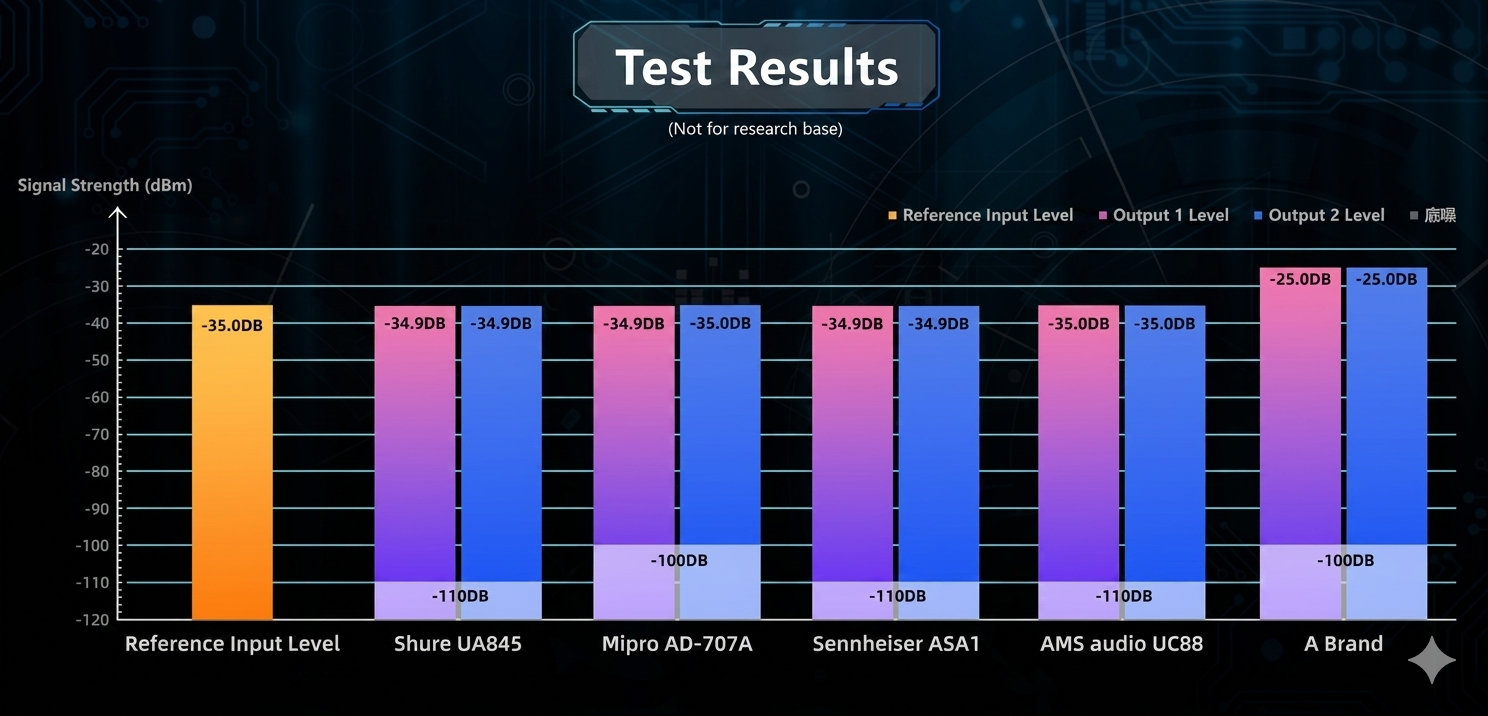
The test results showed that the Shure UA845, AMSaudio UC88, Sennheiser ASA1, and MIPRO AD-707A maintained output levels between -34.9dBm and -35dBm, essentially identical to the reference signal. This demonstrates true lossless signal distribution, which aligns with professional RF equipment design principles.
However, the unnamed brand showed an abnormal output increase to approximately -25.2dBm. Although the signal appeared stronger on the surface, the noise floor simultaneously rose from -110dBm to -100dBm — a full 10dB increase in noise. In complex RF environments such as conferences and live performances, this can easily lead to microphone dropouts, noise, intermodulation, and frequency interference issues.

The first model tested was the Shure UA845. After connecting the RF cables, Output Port 1 measured -34.9dBm, and Output Port 2 also measured -34.9dBm.


The second model tested was the MIPRO AD-707A. Output Port 1 measured -34.9dBm, while Output Port 2 measured -35dBm.
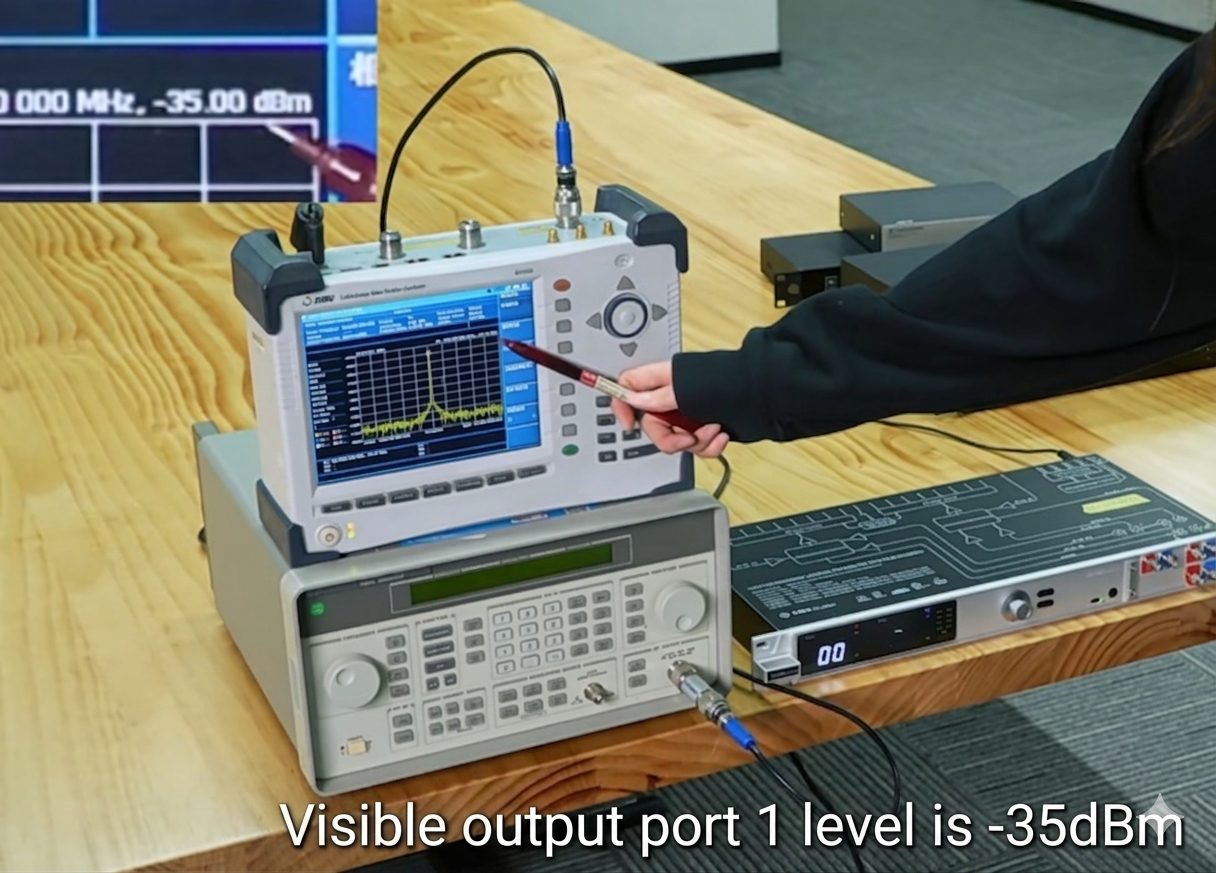
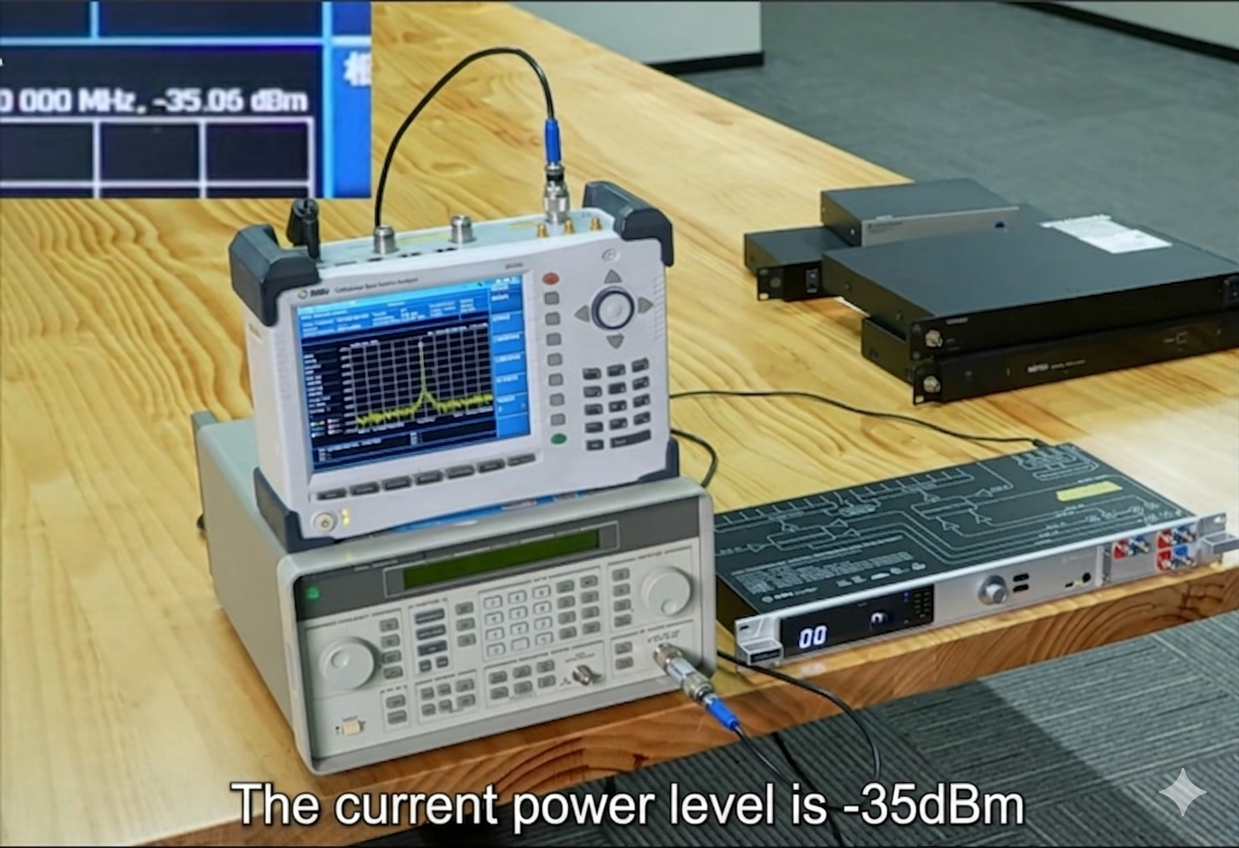
The third model tested was the AMSaudio UC88. Both Output Port 1 and Output Port 2 measured -35dBm.
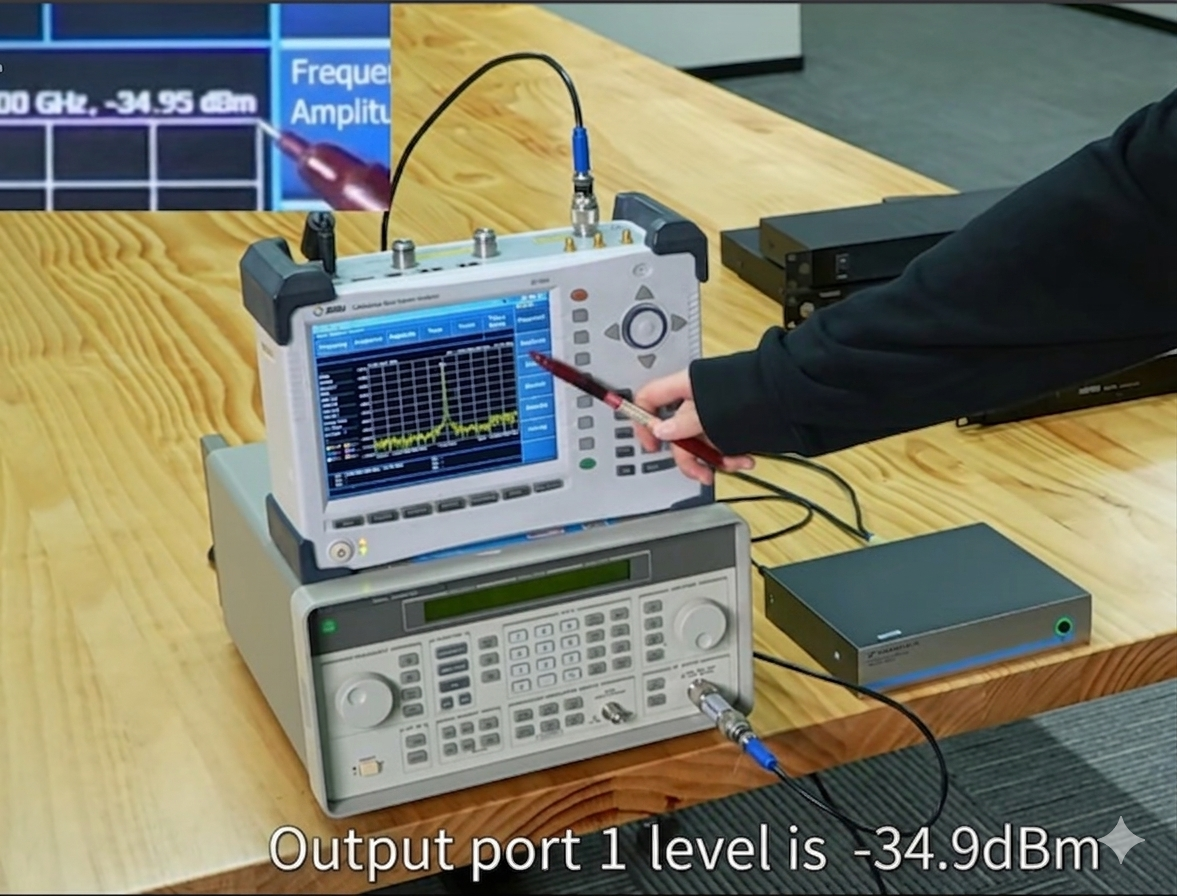
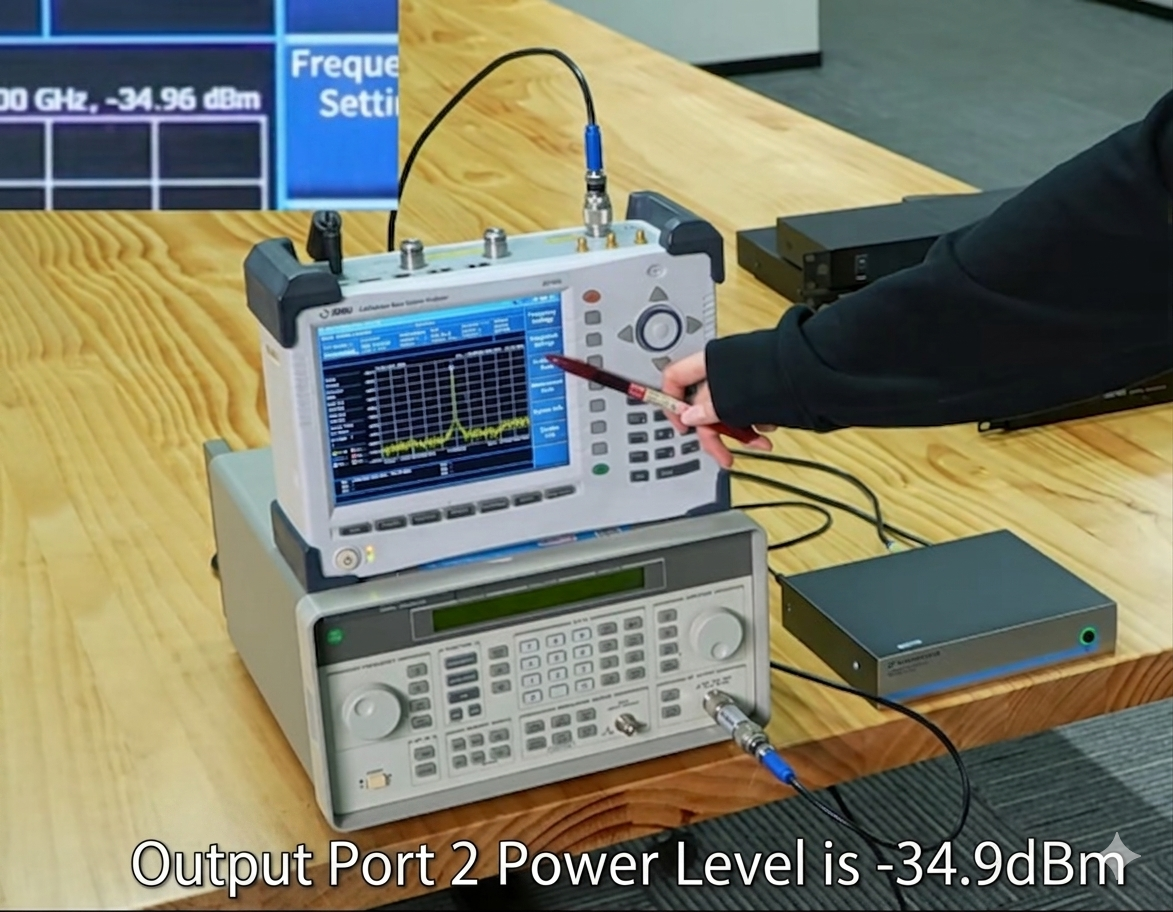
The fourth model tested was the Sennheiser ASA1. Both Output Port 1 and Output Port 2 measured -34.9dBm.
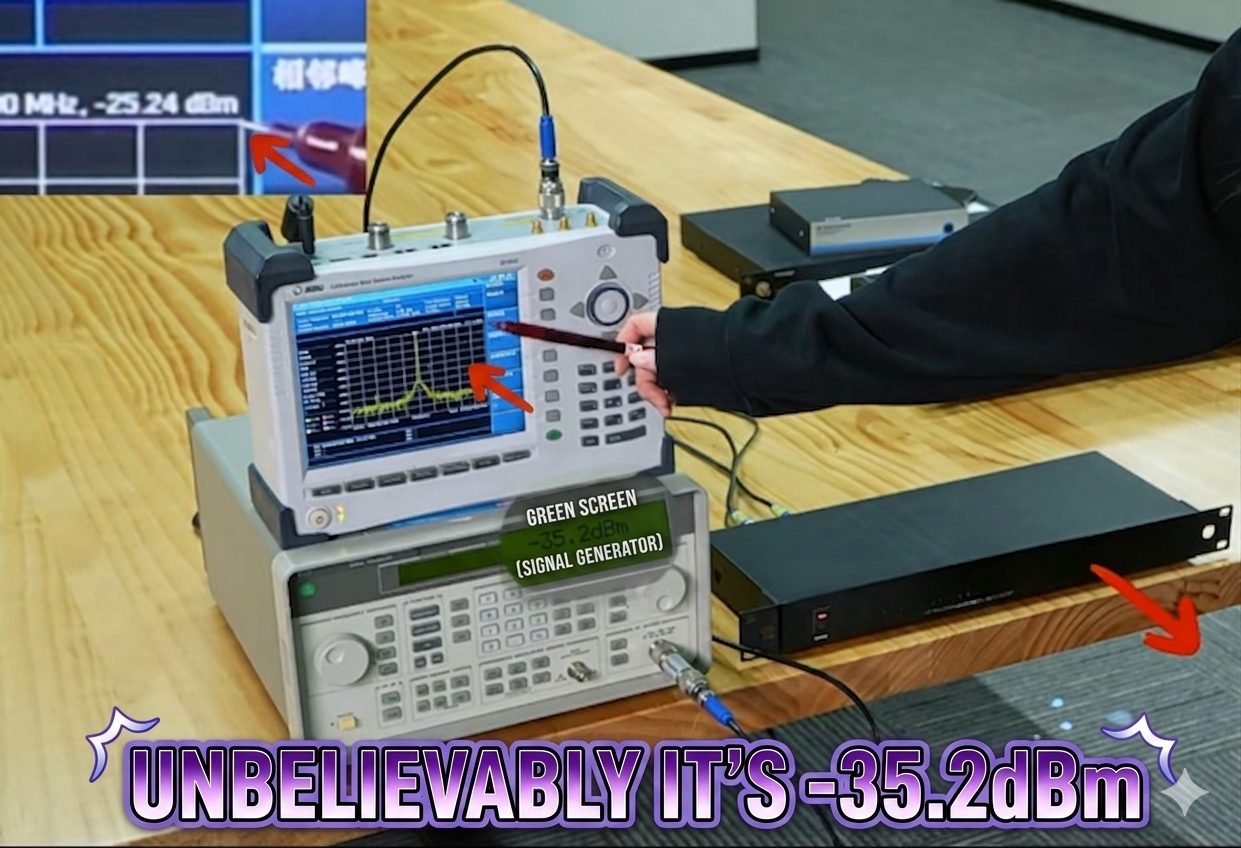
The final model tested was the unnamed brand distributor. After connecting the cables, the first output port surprisingly measured -25.2dBm.
More importantly, the noise floor increased dramatically from the original -110dBm to -100dBm — an additional 10dB of background noise.
Testing of the second output port showed similar results: -25.1dBm output level with the same 10dB increase in noise floor.
The results clearly demonstrate that the core function of an antenna distributor is to evenly distribute RF signals across multiple channels, reduce antenna quantity, and optimize system cabling — not to amplify signals. A qualified professional distributor should follow the principles of “0 gain, low loss, and high isolation” to ensure clean and stable RF transmission.
Some products blindly increase output levels to create the illusion of a stronger signal, but in reality they also amplify noise and interference simultaneously, significantly reducing overall system reliability.
Based on the test results, the engineering team provides the following professional recommendations for equipment selection and deployment:
Prioritize mainstream professional brands such as Shure, Sennheiser, and AMSaudio. Focus on verified RF performance data rather than marketing claims alone.
During on-site deployment, ensure stable power supply and precise frequency matching between devices to avoid signal issues caused by voltage instability or frequency deviation.
Clearly distinguish between “distribution” and “amplification.” Only when compensating for cable loss in long-distance transmission should users select professional distribution systems with controllable gain compensation. Avoid low-quality products that use uncontrolled amplification.
This test uses measurable data to eliminate industry misconceptions and provides a scientific basis for wireless audio system design and equipment selection, helping achieve more stable and reliable wireless signal transmission in live events, conferences, broadcasting, and other professional applications.