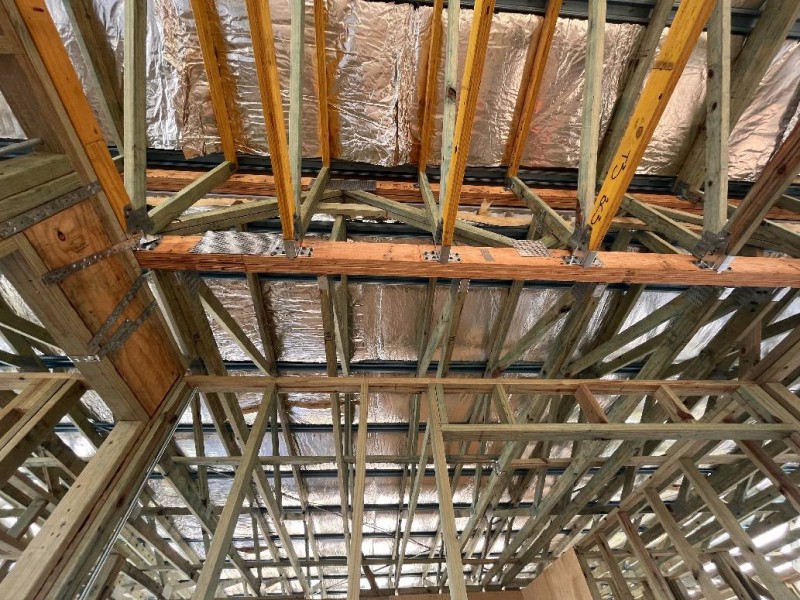
LVL beams are used where builders need a structural member with repeatable dimensions, verified engineering properties and reliable performance across multiple pieces or batches.
LVL, short for Laminated Veneer Lumber, is manufactured from multiple wood veneers bonded together under controlled conditions, with the grain of most veneers oriented along the length of the member. This engineered structure reduces the influence of individual knots and irregular grain found in a single piece of solid timber.
For architects, builders, distributors and prefabrication companies, the key question is not simply whether LVL is “stronger” than conventional timber. The better question is where the exact LVL product fits the project’s span, load, stiffness, connection, exposure and code requirements.
What Is an LVL Beam?
An LVL beam is a structural member manufactured from laminated veneer lumber. During production, veneers are selected, dried, arranged, glued and pressed into a stable engineered section.
Because the member is built from multiple veneer layers rather than a single piece of timber, LVL can provide more consistent dimensions and more predictable product properties. The exact structural performance, however, depends on the manufacturer’s verified data, grade, section size and applicable standard.

What Are LVL Beams Used For?
Depending on the verified product properties and structural design, LVL beams are commonly considered for the following applications:
Roof beams and rafters where stiffness, dimensional accuracy and repeatable member quality are important
Floor beams and floor-framing systems that require controlled deflection and predictable engineering properties
Headers and lintels above doors, windows and other wall openings
Primary or secondary load-bearing beams in timber-frame construction
Components in prefabricated and modular building systems
Selected posts, columns or support members where the specific LVL product is designed and verified for the application
Engineered wood systems, including applications associated with I-joist construction

Why Builders Use LVL Instead of Conventional Solid Timber
| Factor | Structural LVL Beam | Conventional Solid Timber Beam |
| Material structure | Engineered veneer lay-up | Single natural timber section |
| Property consistency | Product-specific and controlled | More dependent on species, grade and individual member |
| Dimensional consistency | Generally high under controlled production | More affected by natural variation and moisture movement |
| Available sizes/lengths | Manufacturer-specific engineered sections | More constrained by log and sawn-timber availability |
| Structural selection | Based on verified product data and engineering design | Based on species/grade data and engineering design |
LVL should not be described as automatically superior in every project. Solid timber remains suitable for many applications. LVL becomes particularly valuable when repeatable dimensions, controlled properties, longer manufactured sections or standardized supply are important.
How to Choose the Right LVL Beam
There is no single “standard LVL beam” that fits every project. Beam selection depends on the complete structural condition.
1. Span and Support Conditions
Clear span, bearing length, support type and member spacing directly affect the required section.
2. Loads
Dead, live, roof, floor, point and other project loads must be defined by the structural design.
3. Stiffness and Deflection
A beam may have sufficient strength but still require greater stiffness to control movement, floor vibration or serviceability.
4. Beam Size and Grade
Thickness, depth, length and the verified grade/design properties of the exact LVL product must be considered together.
5. Connections and Bearing
Fasteners, hangers, brackets, bearing areas and connection geometry influence how forces are transferred.
6. Service Environment
Indoor, protected, moisture-exposed or other conditions can affect product selection and detailing.
7. Applicable Standards
The responsible design professional should use the relevant project standard and the verified technical data for the proposed LVL product.

Can LVL Be Used for Long Spans?
LVL is often selected for projects requiring longer manufactured members and controlled stiffness, but there is no universal maximum span that applies to all LVL beams.
The allowable span depends on the beam section, grade, loading, support conditions, deflection limits, connections and the product’s verified design values. Buyers should avoid using generic online span claims that are not tied to the exact product and design method.
What Buyers Should Send When Requesting an LVL Beam Quote
Required LVL grade or structural design properties
Thickness × depth × length
Application: roof, floor, header, beam, prefabrication or other use
Project drawings and load information, if available
Span and support conditions
Destination market and required standard/certification
Service/exposure environment
Quantity, packaging and target delivery schedule
How Fuqing Supports Structural LVL Buyers
Founded in 1990, Jiangsu Fuqing Wood Co., Ltd. integrates wood processing, engineered wood manufacturing and international trade. Fuqing supplies structural LVL, non-structural LVL, SLVL, I-joists, structural plywood and LVL scaffold planks to international markets.
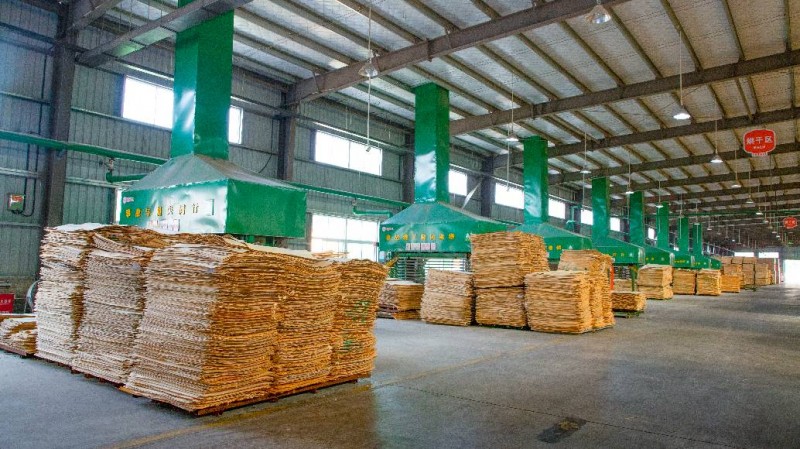
For structural LVL, Fuqing focuses on the manufacturing controls that directly affect repeatability: veneer grading, moisture control, adhesive preparation, lay-up, hot pressing, conditioning and finished-product inspection.
Fuqing operates a manufacturing base of approximately 300,000 m², with annual overall output of approximately 350,000 m³ and annual LVL capacity of approximately 170,000 m³. More than 20 veneer drying units support moisture management and production stability.
Fuqing has manufacturing capabilities in China and Vietnam. Product type, origin and compliance documentation should be matched to the individual order and destination market; Fuqing’s Vietnam operation is currently positioned for non-structural LVL.
For structural beam inquiries, Fuqing can review the requested dimensions, grade, application and destination-market requirements, confirm available manufacturing options and provide product data and quotation information for procurement evaluation.


Looking for an LVL Beam Manufacturer?
If you are sourcing LVL beams for construction, distribution, prefabrication or engineered wood systems, send Fuqing your required grade, dimensions, application, quantity and destination market.
The more complete the project information, the faster the specification review and quotation process.
REQUEST A QUOTE | VIEW STRUCTURAL LVL | CONTACT FUQING
Email:fuqinglvl@fuqingmuye.com
Web: http://www.fuqingmuye.com
Frequently Asked Questions
What are LVL beams used for?
LVL beams are commonly used in roof framing, floor systems, headers, load-bearing beams and prefabricated timber construction, subject to the exact product properties and project design.
What does LVL stand for?
LVL stands for Laminated Veneer Lumber, an engineered wood product manufactured from bonded veneer layers.
Are LVL beams stronger than solid timber beams?
LVL can provide more consistent engineered properties, but a universal strength comparison is not technically appropriate. Compare the verified design values of the exact products.
Can LVL beams be used for long spans?
They can be used in longer-span applications when the beam size, grade, loads, deflection limits and support conditions are properly engineered.
What sizes are available?
Available dimensions depend on the manufacturer’s production capability and the required grade/application. Beam size should be selected from project calculations rather than appearance alone.
What should buyers provide for a quote?
Provide grade/properties, dimensions, application, span, drawings/load data if available, destination market, standards, quantity and delivery requirements.